History, Sustainability and the site
The Story
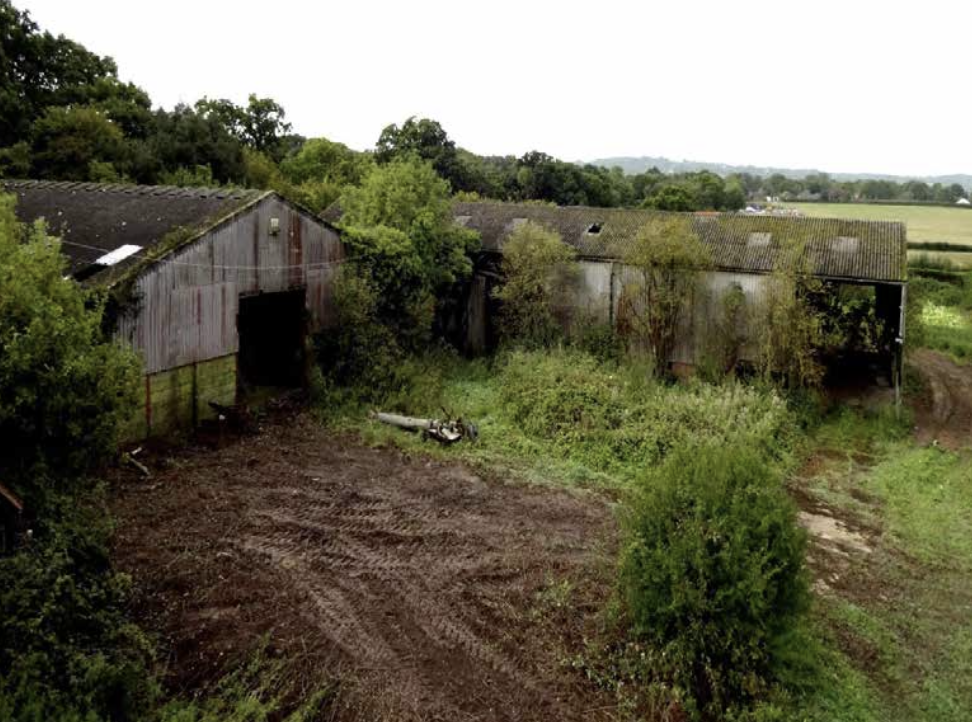
In 2017, husband and wife Colin and Linh discovered a derelict overgrown, agricultural barns at auction. Inspired by the potential for agricultural building rejuvenation, they decided to purchase the site and pursue their vision for a reuse of buildings in the countryside.
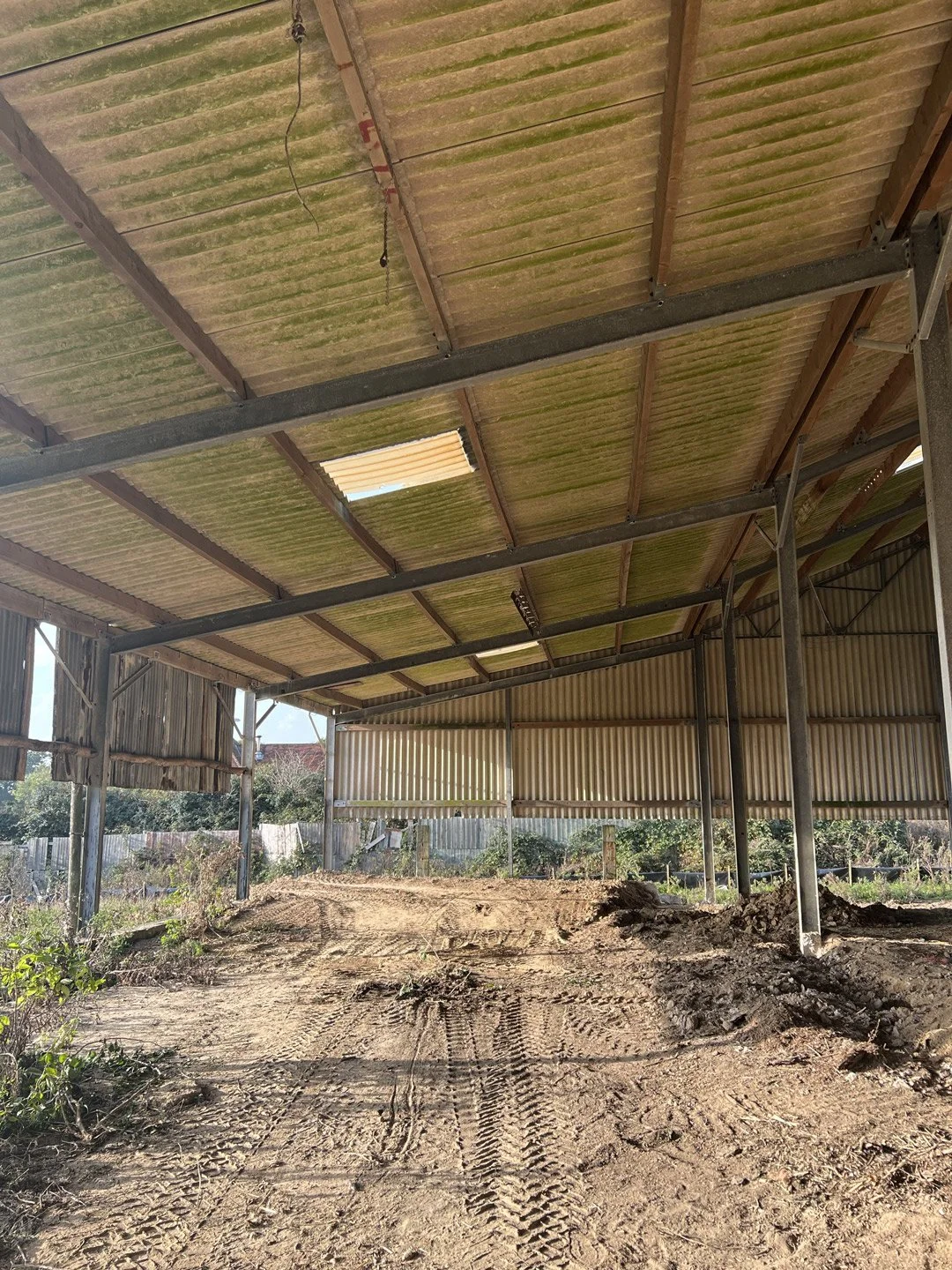
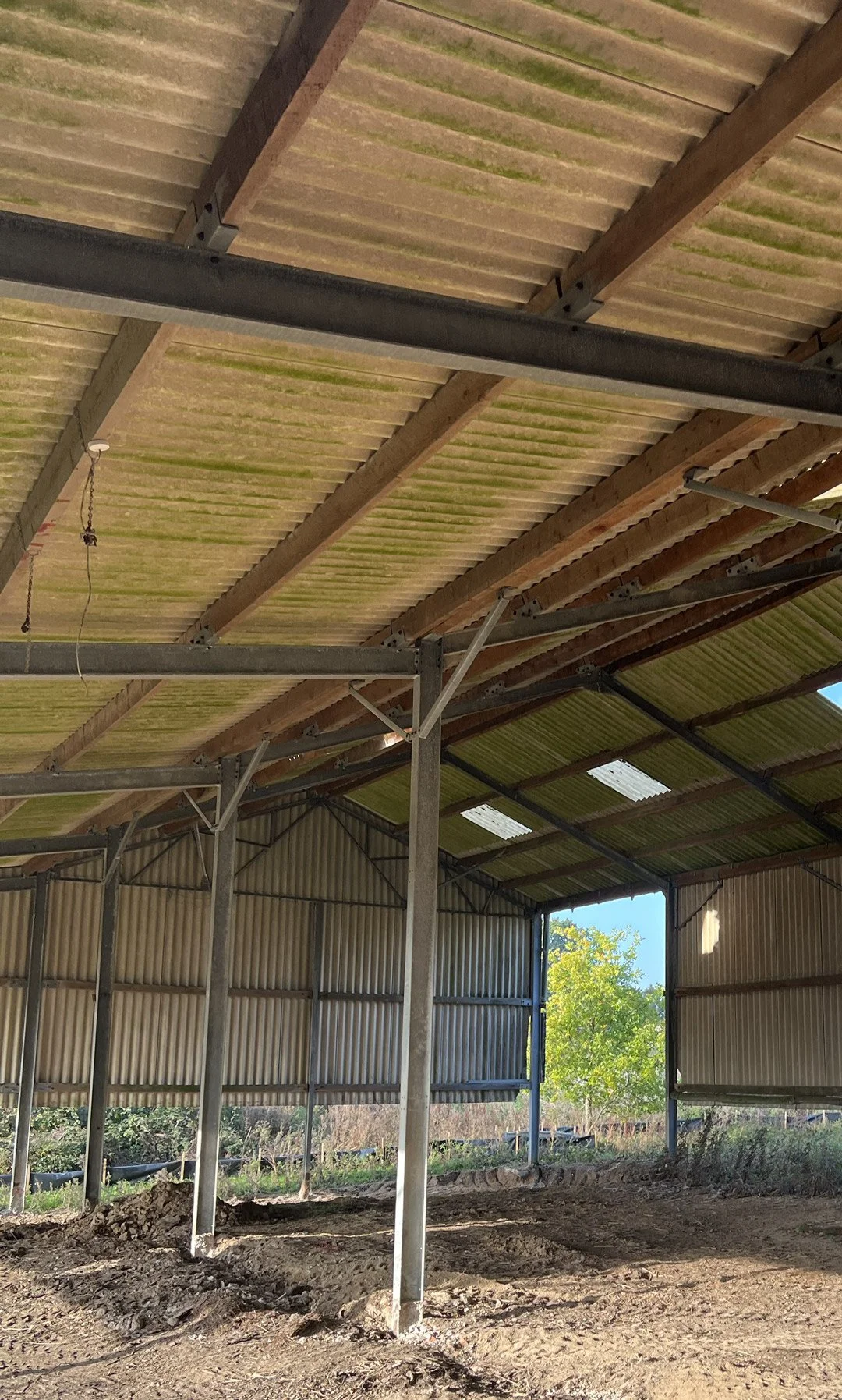
At the time, the property comprised two asbestos-clad barns, several abandoned vehicles, a dilapidated brick cowshed, and a mountain of brambles. Undeterred, they embraced the challenge, setting out to transform the site into a sustainable, ecologically sensitive, and wellness-focused development.
Colin and Linh split their time between Hackney and Hastings. Colin was originally from Hastings and Linh originally from Vietnam and have strong connections with the area. The scheme was delivered entirely by Colin and Linh acting as architects, developer, and main contractor, this allowed for a tightly controlled design-and-build process from concept through to completion.
Planning & the vision
The planning process with Rother District Council was lengthy and challenging. Only Class R permitted development was allowed, reflecting local planning restrictions that did not support permanent residential use. Colin and Linh carefully navigated these constraints, responding to regulations while remaining committed to the vision of a sustainable, ecologically sensitive redevelopment.
Sustainable Construction Approach
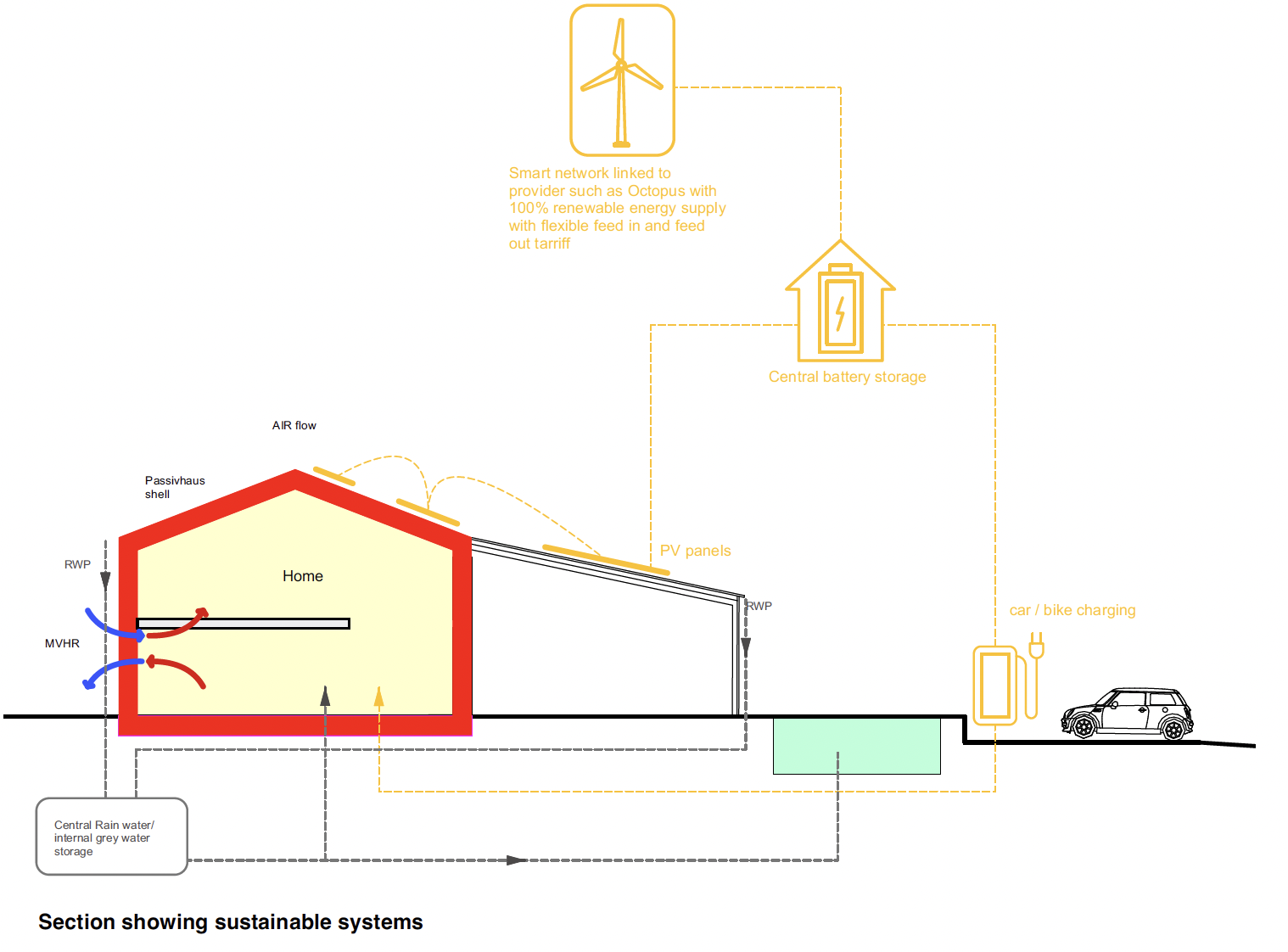
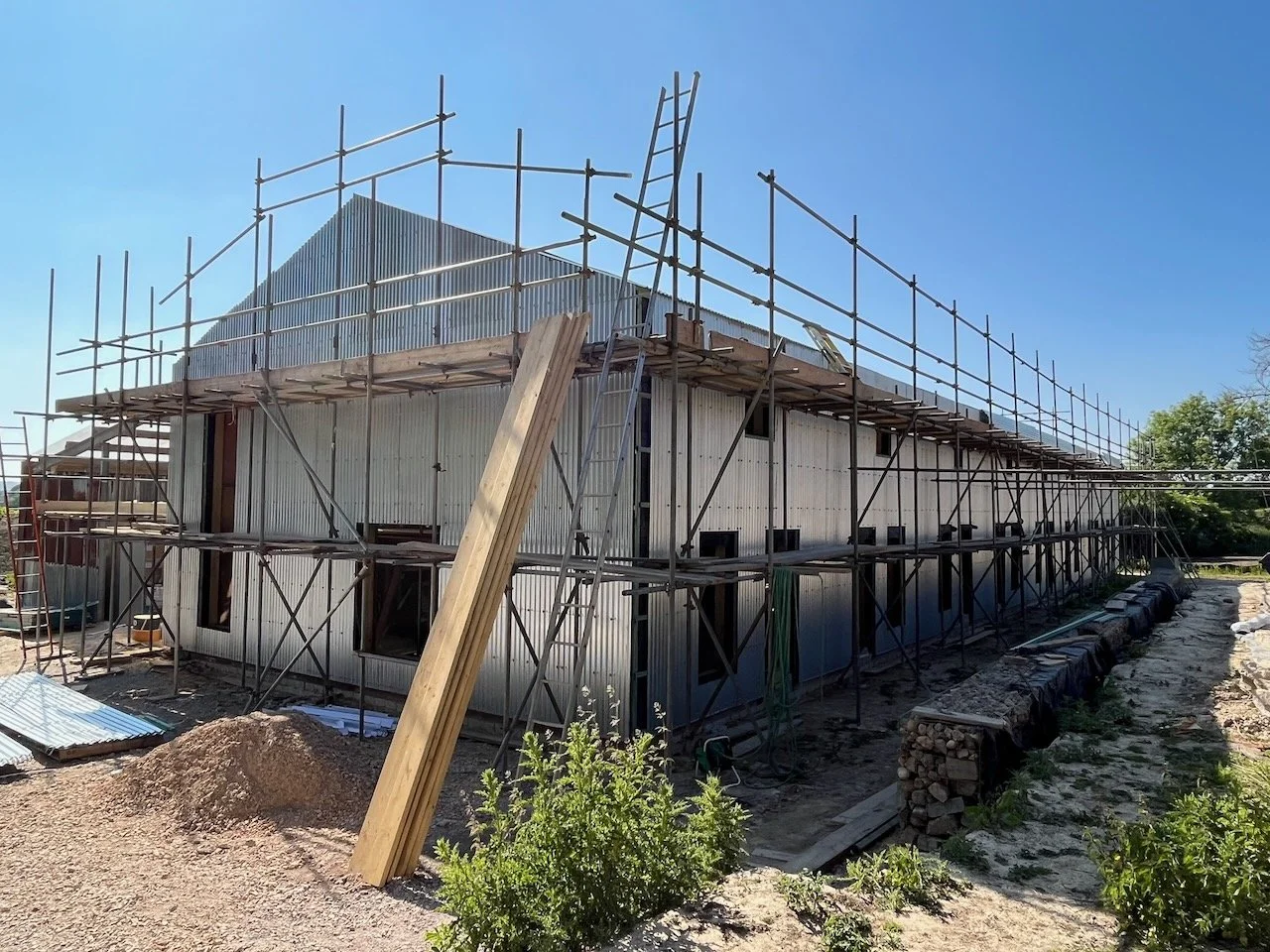
The building is conceived using a fabric-first philosophy, prioritising simple, off-the-shelf construction methods and sustainable materials. The design embraces circular economy principles, with a strong emphasis on recycling, reusability, and low embodied carbon from the outset.
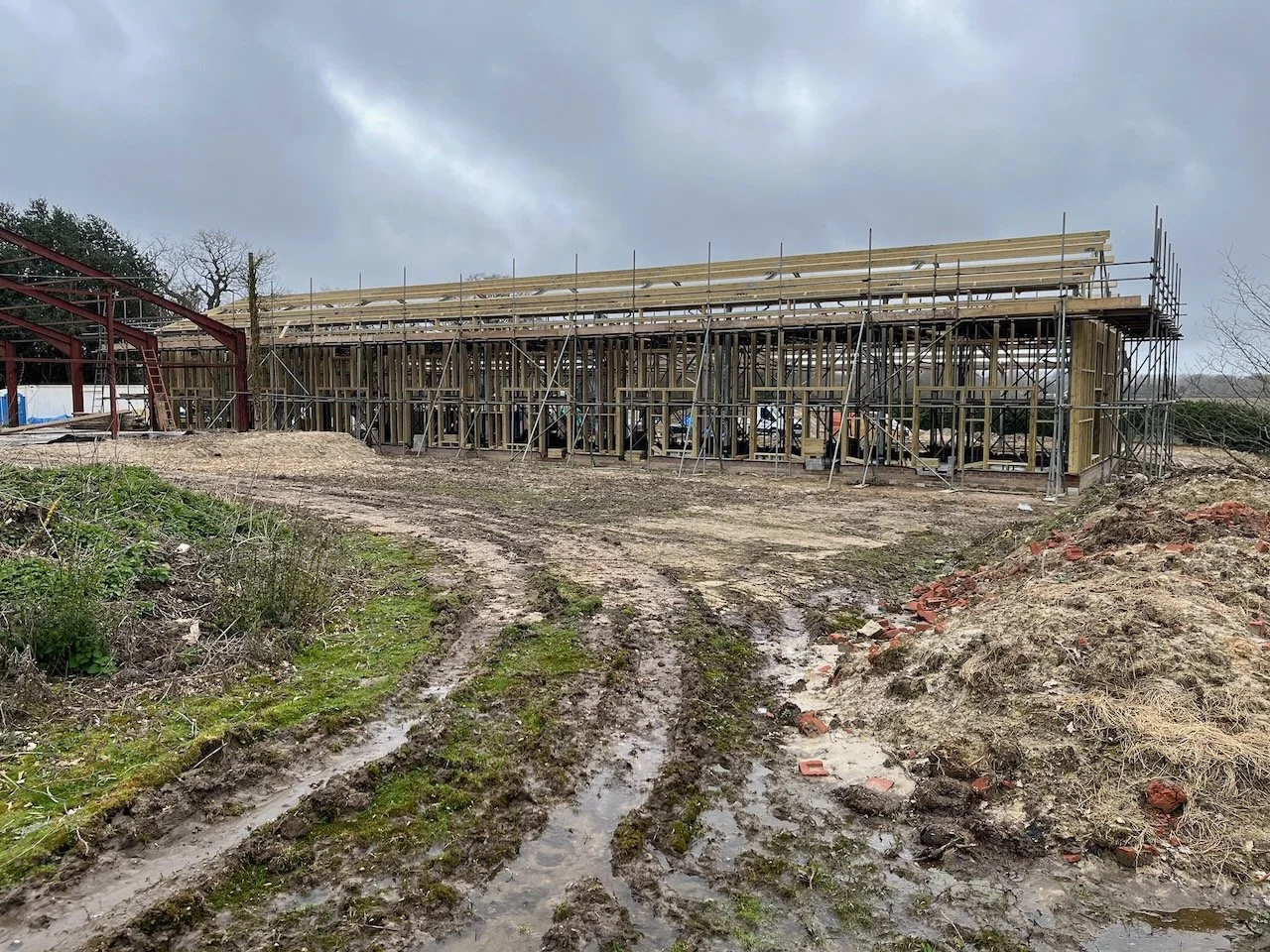
The structure comprises a timber frame sourced from responsibly managed forests. Thermal performance is enhanced through flexible wood fibre insulation installed between the timber structure, providing high levels of insulation while maintaining vapour permeability and breathability. An airtight membrane is incorporated to minimise heat loss and improve overall energy efficiency.
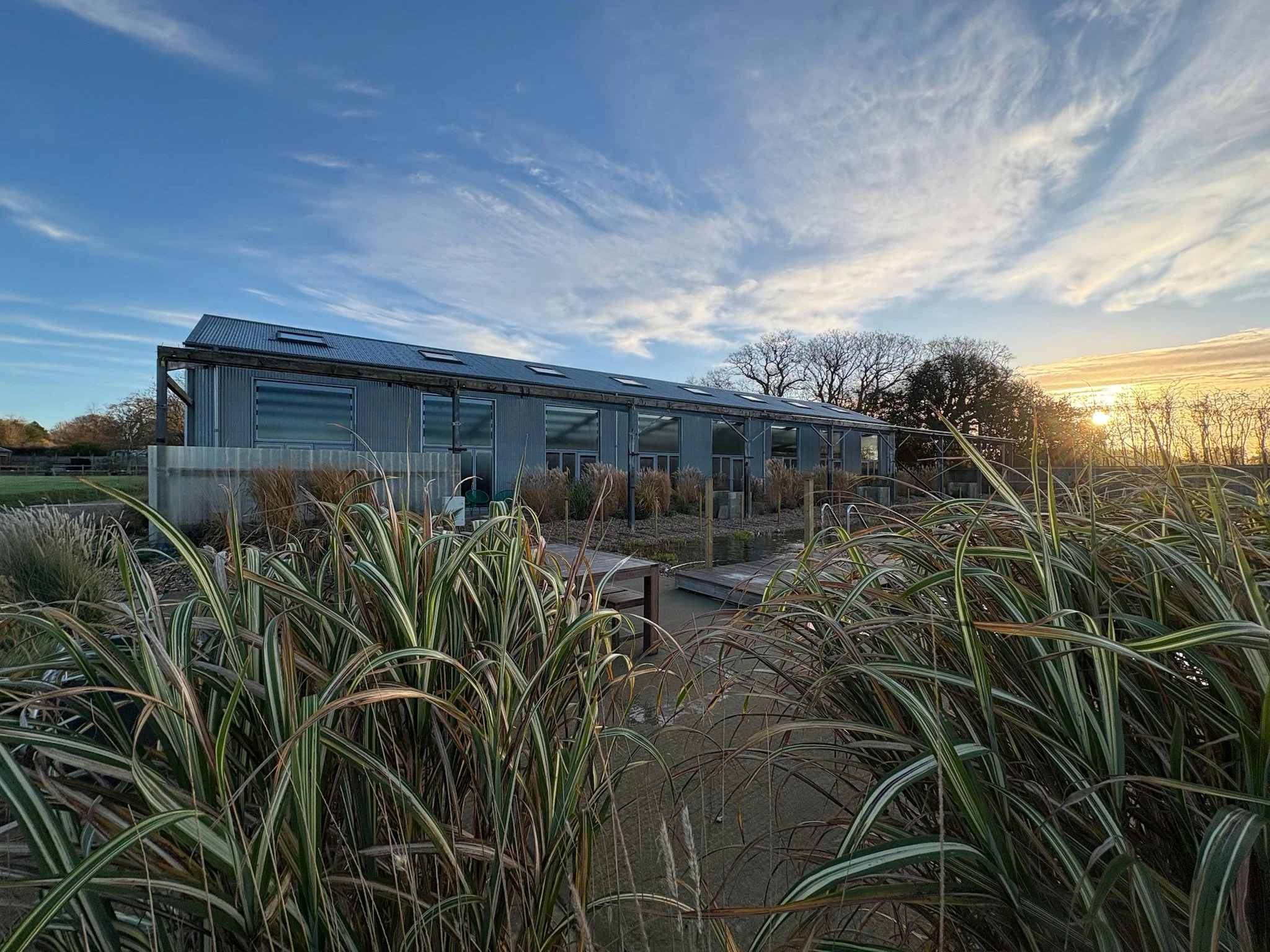
A mechanical ventilation with heat recovery (MVHR) system ensures a continuous supply of fresh air while recovering heat from exhaust air, reducing energy demand. Space heating and domestic hot water are provided by a high-efficiency air source heat pump (ASHP), supported by a renewable energy strategy. The building is oriented to maximise passive solar gain, with large areas of south-facing glazing to enhance natural daylight and contribute to passive heating, while appropriate shading is incorporated to prevent overheating.
All materials and systems have been carefully selected to achieve a high sustainability rating, prioritising low embodied carbon, environmental responsibility, long-term durability, and occupant comfort.
Materials
Airtight Membrane
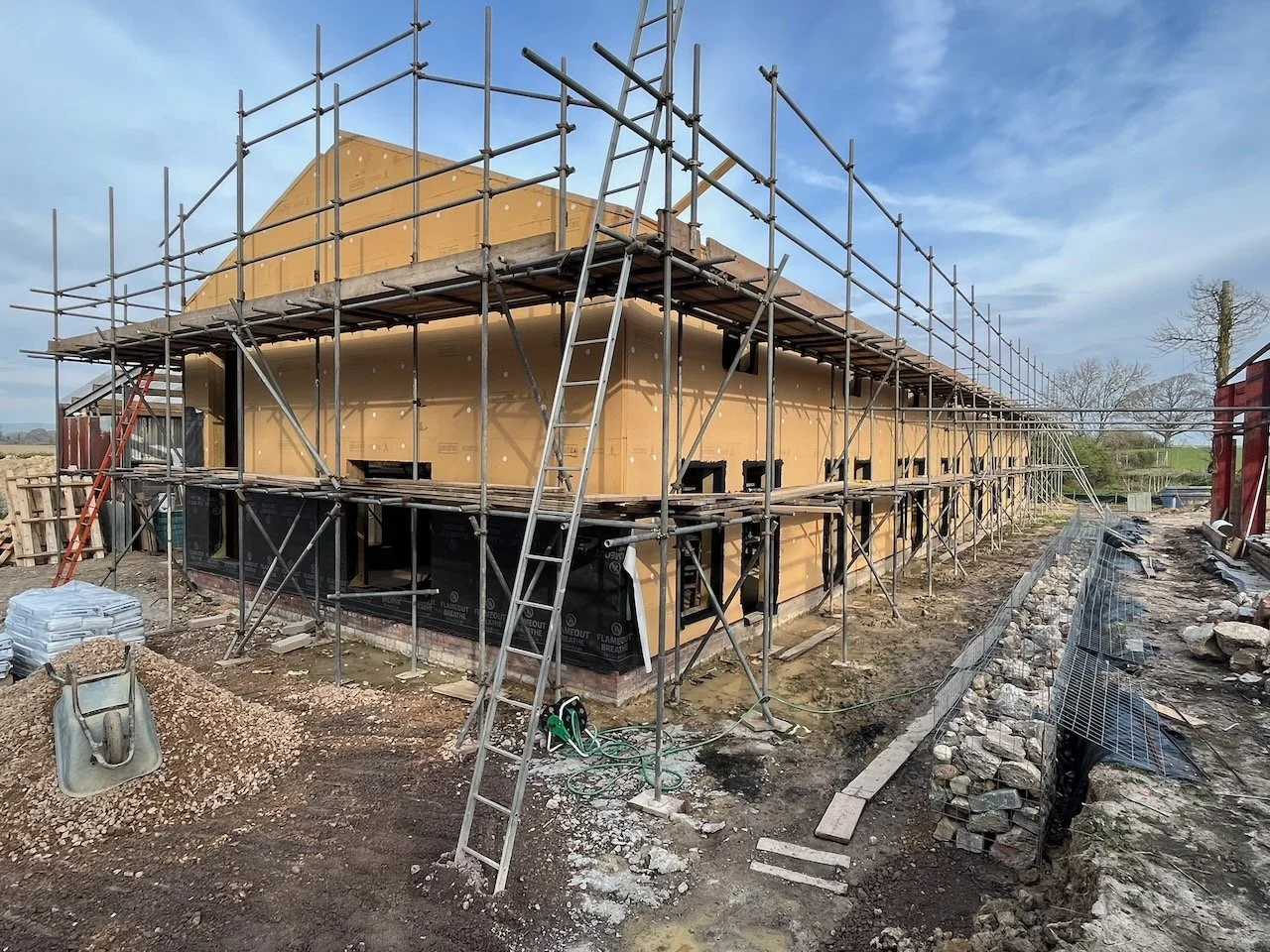
An airtight membrane is a continuous barrier applied to the building envelope (walls, roof, floor) to prevent uncontrolled air leakage. This reduces heat loss, drafts, and the risk of condensation, improving energy efficiency, occupant comfort, and protecting the building fabric from moisture damage. We have used a leading industry product: Pro Clima Intello Plus.
MVHR
Mechanical Ventilation with Heat Recovery (MVHR) is a whole-house system that continuously supplies fresh, filtered air while recovering heat from outgoing stale air. It extracts moist air from kitchens, bathrooms, and utility areas, transferring heat to incoming fresh air, reducing heating demand, preventing condensation, and improving indoor air quality.
Glazing
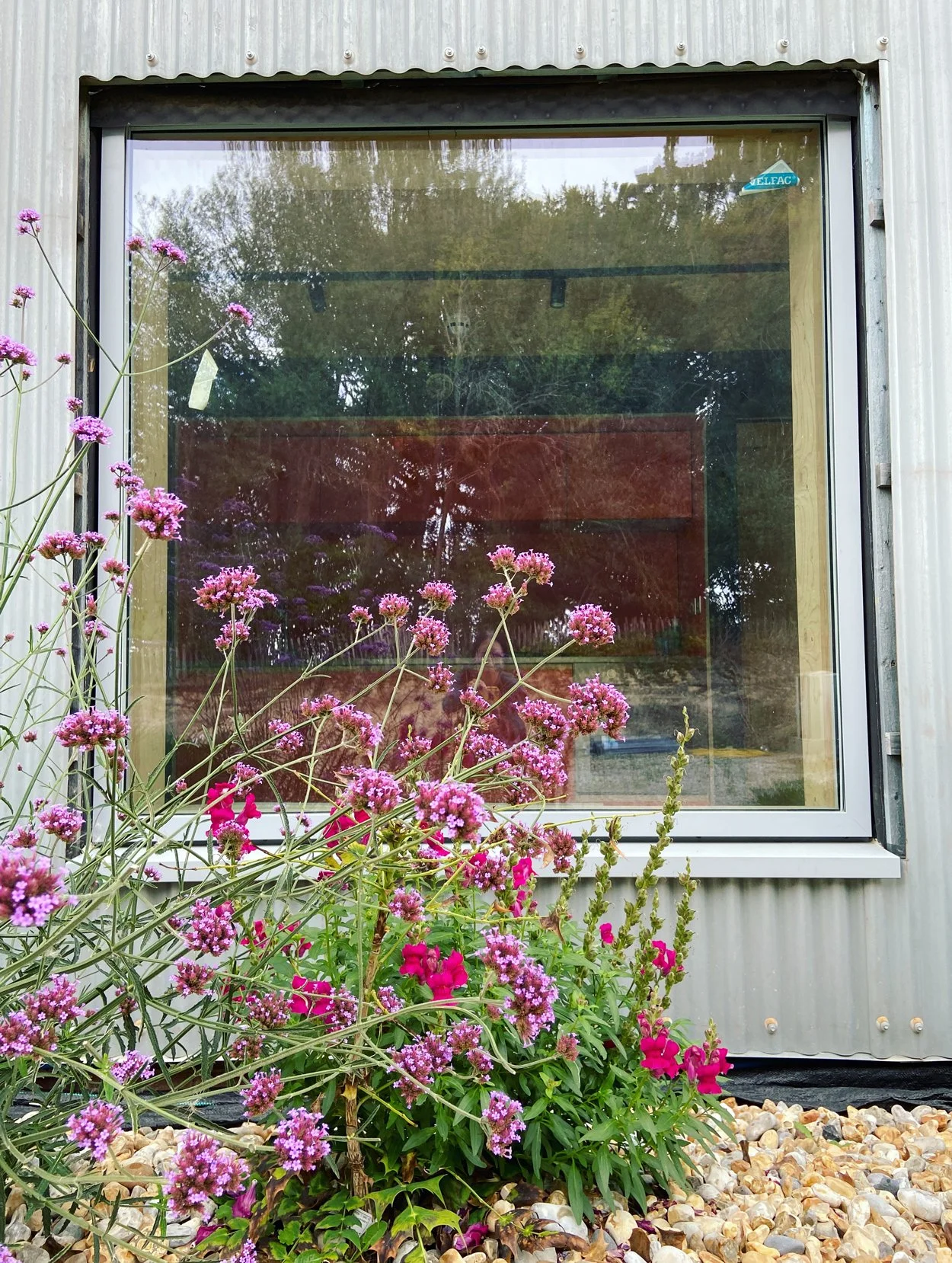
VELFAC Triple Glazing: High-performance composite window system with three panes of glass and a unique frame construction, offering superior thermal and acoustic insulation.
VELUX Triple Glazed Rooflights: Three-layered pane system providing enhanced energy efficiency, sound insulation, and safety compared to standard double glazing.
Wood Fibre Insulation
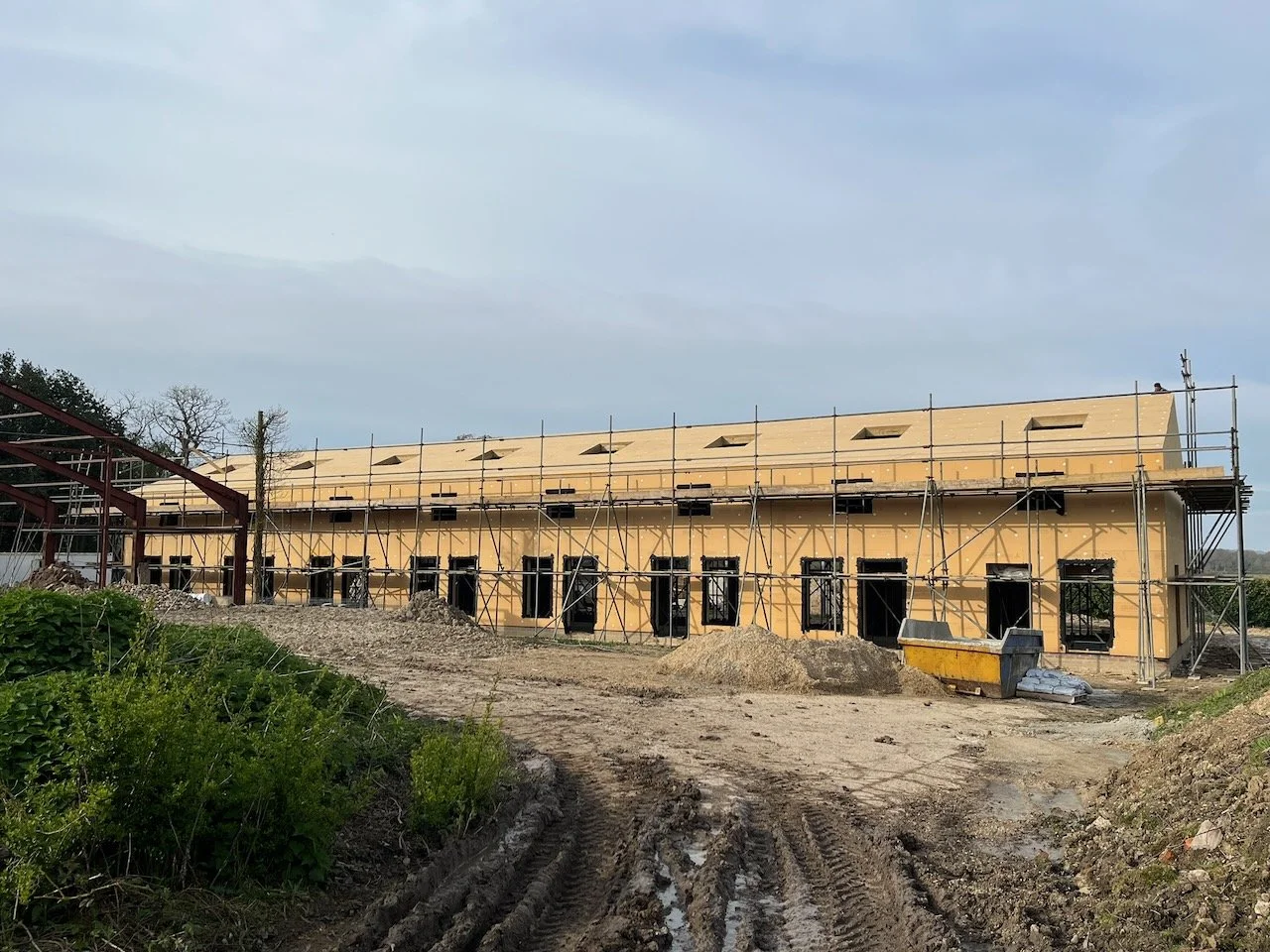
Soprema wood fibre insulation is eco-friendly, vapour-permeable, and windproof. Made from waste sawmill wood shavings, it delivers excellent thermal and acoustic performance, contributes to a circular economy, and provides protection in both winter and summer conditions.
Isolair Multi Sheathing Board
Landscape
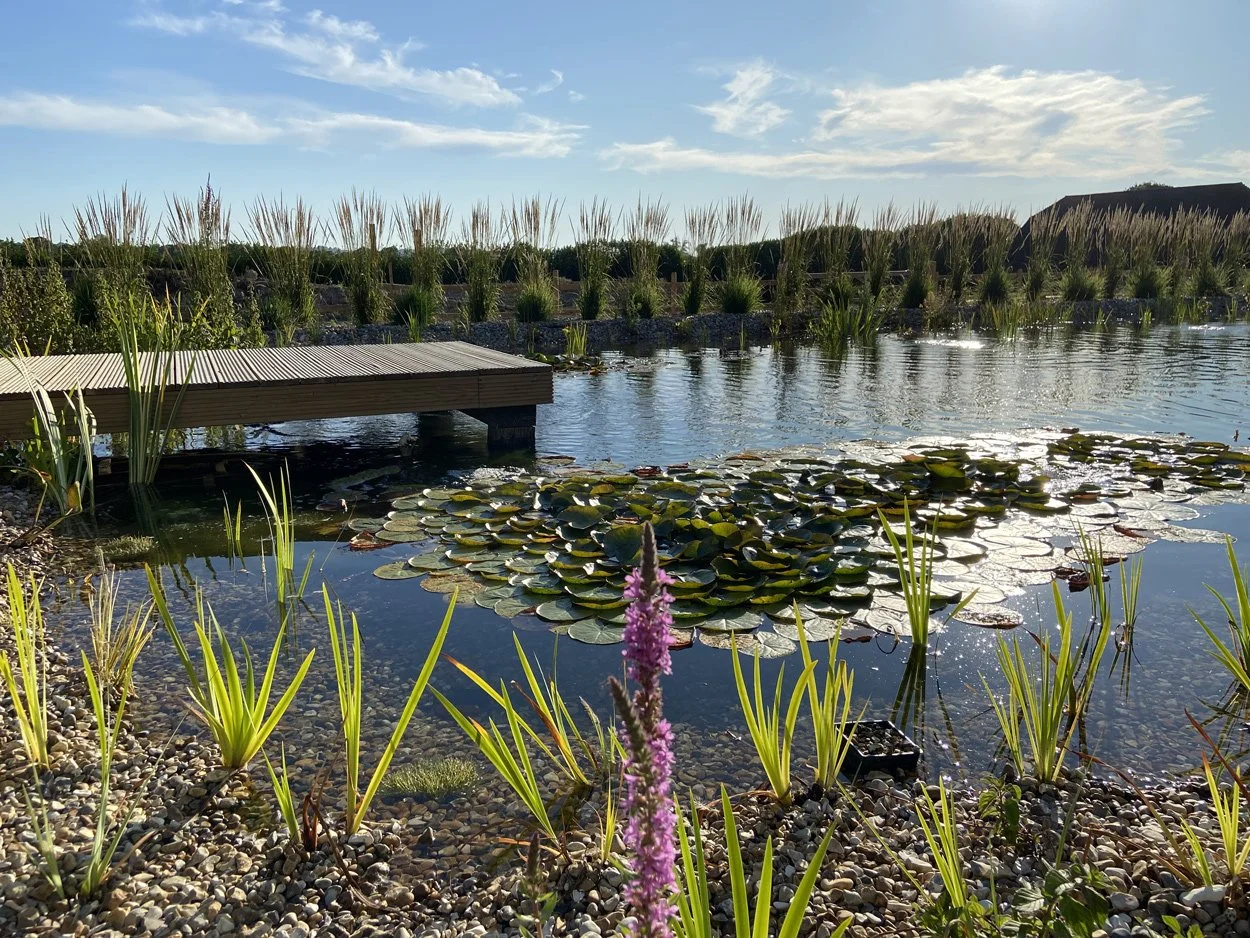
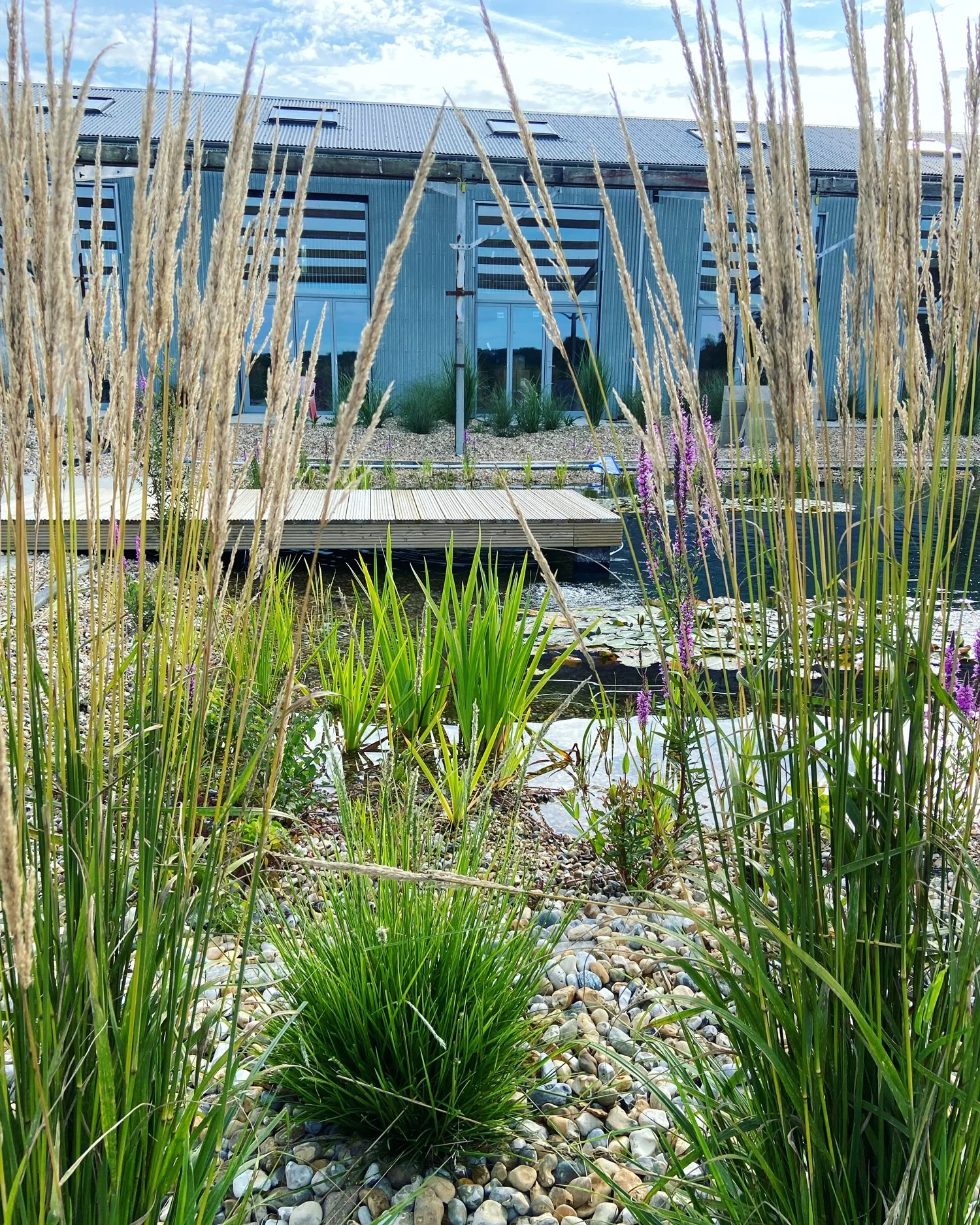
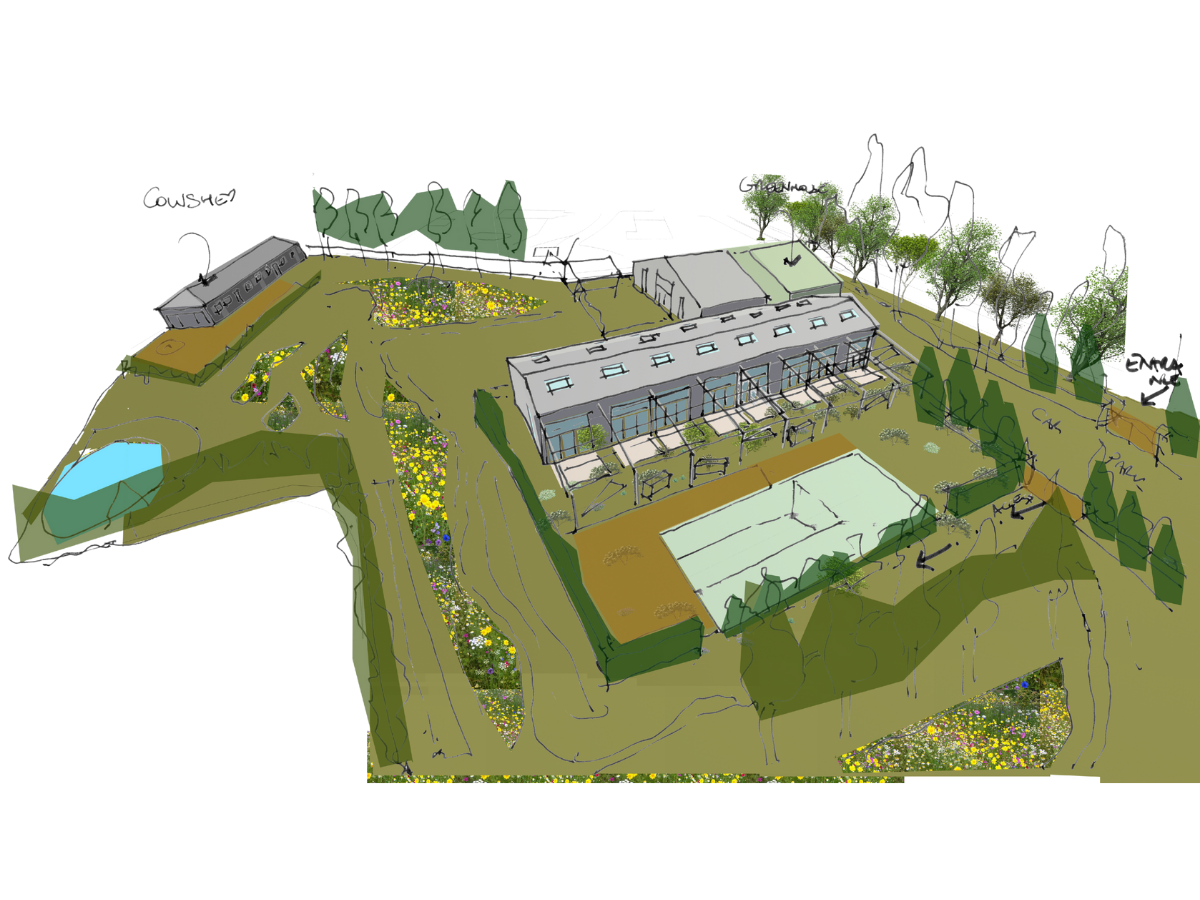
The landscaping is designed to work with the site’s heavy clay soils while promoting water resilience. Long views, avenues, and meandering paths create distinct areas for exploration.
Wildflower meadows establish the initial foundation, while additional planting layers and new areas will be introduced over time to build ecological complexity.
The planting strategy was developed in collaboration with local RHS Chelsea Gold medal winners Ray and Wendy Bates of Rotherview Nursery, ensuring expert horticultural guidance and a high-quality design.
The landscape combines ecological sensitivity with aesthetic experience, enhancing the site’s natural character and creating habitats that support local wildlife.